Freelance Writer Tax Guide: Client Payments, Research Costs, and a Cleaner Recordkeeping System

Writing income can look simple right up until it is time to explain it. A freelancer files a few invoices, gets paid through two or three platforms, buys books, software, and interview tools, and assumes the books will be easy to clean up later. Then year-end arrives and the business story is scattered across bank deposits, card charges, reimbursement emails, and half-remembered subscriptions.
That is why tax stress is so common among freelance writers. The problem usually is not that the work is unusually complex. It is that the money and documentation are more fragmented than they seem. A reliable writer tax system makes it easy to separate what was true income, what was reimbursed, what supported reporting or content production, and what should have been reserved for taxes before it felt available to spend.
Why freelance writing income gets messy faster than expected
Many writers work across a mix of assignments that do not behave the same way. A magazine feature may pay months after publication. A content marketing retainer may arrive every month. A ghostwriting job might include milestone payments, rush fees, or revision rounds that never fit neatly into one category. Add platform payouts, affiliate income, or occasional editing work, and the income picture stops being clean.
That variety is not a problem by itself. The trouble starts when different revenue types are all treated as one generic deposit stream. Once that happens, it becomes harder to understand true margins, harder to estimate quarterly taxes, and harder to explain the business clearly if you ever need to review records or defend deductions.
Separate income by how it is earned
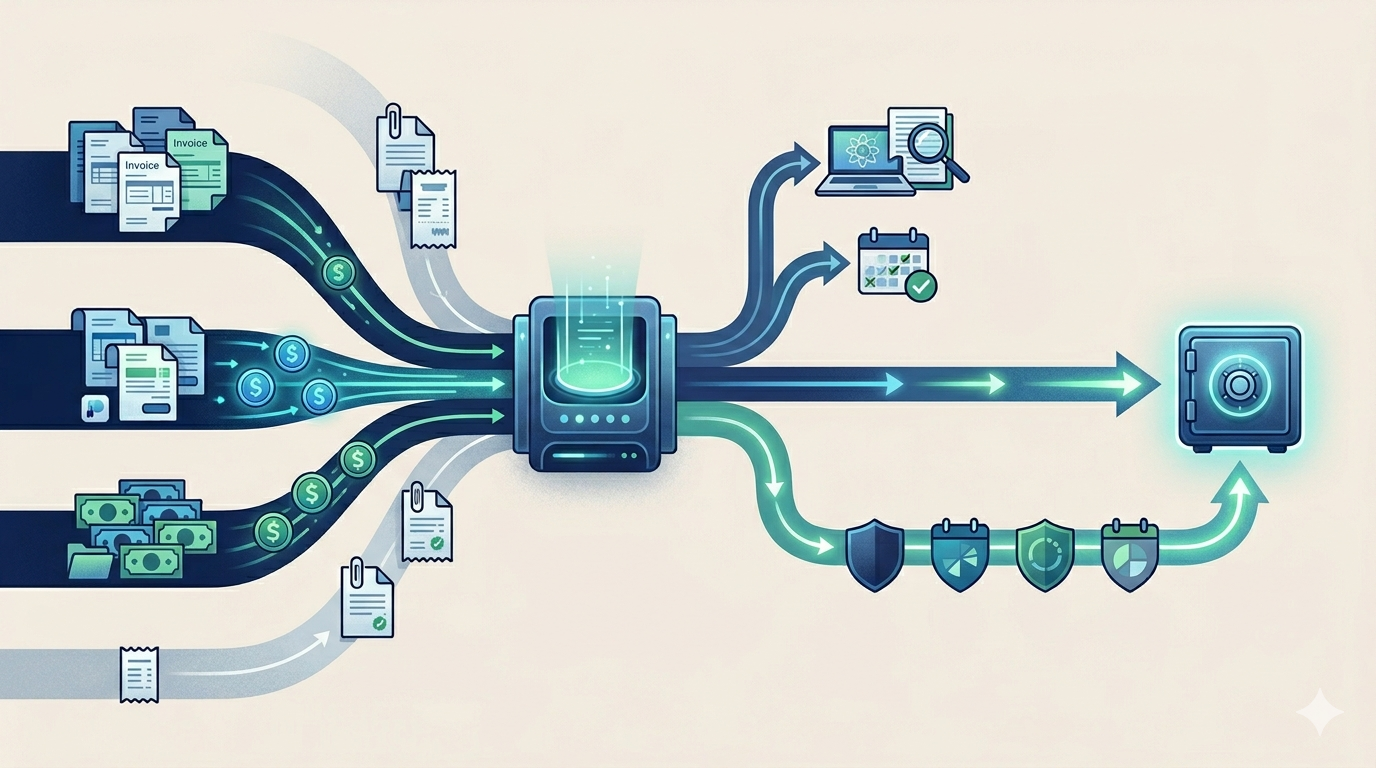
Editorial, content marketing, and ghostwriting should not all live in one bucket
A writer who works with publications, agencies, direct clients, and self-published products is running several income engines at once. That does not mean the bookkeeping has to be complicated, but it does mean the categories should reflect reality.
Helpful income categories often include:
- Editorial or publication assignments
- Brand content or content marketing retainers
- Ghostwriting and strategic writing projects
- Editing, coaching, or related service income
- Affiliate, licensing, or other side revenue tied to writing work
Those categories make the business easier to read. They also make planning easier. If one income stream is stable and another is volatile, quarterly tax planning should reflect that instead of pretending every dollar arrives on the same rhythm.
Reimbursements need their own lane
Writers often incur costs on behalf of a project. That might include travel for a reported feature, a paid interview transcript, access to a database, a research document, or a specialized source list. When a client reimburses those items, the cleanest records make it obvious that the reimbursement was not ordinary operating margin.
If reimbursed costs are mixed into ordinary revenue, the business can look more profitable than it really was. If the underlying expenses are also buried, the books become harder to trust.
Research and production costs are legitimate, but they need a paper trail
Freelance writers tend to accumulate a long tail of smaller expenses that feel obvious in the moment and fuzzy months later. Research books, paywalled articles, note-taking software, cloud storage, grammar tools, transcription services, call recording apps, co-working days, and travel connected to assignments can all be part of the work. The issue is not whether writers spend money. The issue is whether the records tell a coherent story.
The strongest deduction system is not built on last-minute memory. It is built on documentation that connects the purchase to the work. A clean expense record should make it unsurprising that the cost was ordinary and necessary for a writing business.
Common writer expense groups worth keeping distinct
- Research materials and source access
- Writing and editing software
- Web hosting, newsletters, and portfolio tools
- Phone, internet, and communication tools where business use is supportable
- Travel and reporting-related expenses tied to assignments
- Home office costs where the facts clearly support a home office deduction
Not every writer needs dozens of categories. But the categories you do use should make real business sense.
Contractor income often creates a false sense of cash health
Writers are especially vulnerable to the gap between bank balance and actual after-tax profit. A strong month can feel reassuring because the overhead is light. There is no inventory and often no payroll. But that simplicity hides the tax liability. The money can sit in the operating account long enough to feel available, even when part of it already belongs in a quarterly reserve.
This gets worse when clients pay in clusters. A writer may go through a lean stretch, then receive several large payments close together. Without a reserve habit, the high month gets interpreted as spendable progress instead of a moment to stabilize taxes and cash flow.
Quarterly taxes work better when they are tied to each payment
The most practical tax habit for many writers is to stop treating estimated taxes as a separate seasonal event. It is usually more reliable to connect tax reserves to every payment as it arrives.
A simple operating rhythm looks like this:
- Move a set percentage of each cleared client payment into a dedicated tax reserve account.
- Review income and expense totals monthly instead of waiting for quarter-end panic.
- Reconcile open invoices, reimbursements, and subscriptions before each estimated payment window.
This matters because writing businesses rarely fail on theory. They fail on timing. Good records reduce the number of unpleasant surprises, but reserve discipline is what prevents those surprises from turning into cash problems.
Multi-client work makes records more important, not less
Writers often think of themselves as simple service businesses because the operation is lean. In reality, multiple clients, staggered payments, and project-based expenses create plenty of moving parts. If one client prepays, another pays late, and a third reimburses travel in a different month, the books need to keep those timelines straight.
That is also why invoice hygiene matters. Every invoice should be easy to connect to the deposit that followed it. If a payment platform reduces fees before payout, that should be visible. If a portion of an invoice covers reimbursable cost, that should be visible too. Small clarity wins add up quickly by year-end.
The goal is a business story you can explain in minutes
A strong freelance writer tax system is not impressive because it is sophisticated. It is impressive because it is easy to understand. You can show what kind of writing work generated revenue, what part of the money was reimbursement, what costs supported research and production, and how much was reserved for taxes before it blurred into personal spending.
If you want to tighten the system this year, start with three moves: clean income categories, documented expense groups, and a standing quarterly reserve habit. For most freelance writers, those changes do more to reduce tax chaos than another season of reconstructing the business from memory.